Most explanations of the RO water filter process begin with a diagram of a membrane and end with a list of contaminants. That is accurate, but it skips the part that matters when you are actually sizing, buying or servicing a system: reverse osmosis is a sequence, and every stage in that sequence exists to protect the one behind it.
We have spent more than fifteen years manufacturing filter cartridges, housings and complete reverse osmosis systems, and the questions we hear from buyers almost always come back to the same point. Water does not simply "get filtered". It is pushed, staged, split and polished, and each of those steps has its own limits, its own failure modes and its own replacement interval. This article walks through that chain from the feed inlet to the faucet, in the order the water actually travels.
Osmosis, Then a Push in the Other Direction
The word reverse in reverse osmosis is doing real work. Osmosis is what happens when two water solutions of different concentration sit on either side of a semi-permeable membrane: water drifts toward the more concentrated side by itself, with no pump and no electricity, because the system is trying to even itself out. Reverse osmosis does not cancel that tendency. It overpowers it.
Osmosis, the natural direction
Place fresh water on one side of a membrane and salty water on the other, and water molecules migrate toward the salty side until the concentrations balance or the rising head pressure stops the flow. Nothing is filtered here. The membrane is simply a barrier that water can cross and dissolved salts largely cannot, so the water moves to where the chemistry says it should go.
Reverse osmosis, the engineered direction
Now apply external pressure to the concentrated side, higher than the natural osmotic pressure of that water, and the flow flips. Water is forced through the membrane against its natural tendency, leaving dissolved salts, metals and larger organics behind on the feed side. That applied pressure is the whole trick, and it is why line pressure, pump selection and temperature matter so much.
In a working system the pressurised feed stream splits into two outputs. Permeate is the water that has crossed the membrane and continues toward the tap. Concentrate, sometimes called brine, is the stream that carries the rejected material away to drain. The ratio between them is the recovery rate, and household systems commonly run somewhere between one part permeate to one part concentrate and one part permeate to three parts concentrate, depending on feed quality and membrane design.
The RO Water Filter Process, Stage by Stage
Water enters a household reverse osmosis unit at whatever pressure and quality the building supplies, and leaves it as permeate. Between those two points there are usually four to six defined stages, and the order is not arbitrary.
1
Sediment pre-filtration
A spun-bonded or pleated cartridge, usually rated at 5 micron, catches rust, sand, pipe scale and suspended particles. Its job is not to make water drinkable. Its job is to stop the carbon block behind it from being blinded at the surface, because a carbon block loaded with grit loses its chlorine capacity long before it should.
2
Pre-carbon block filtration
Compressed activated carbon removes chlorine, taste, odour and a share of organic compounds. On an RO system this is a protective stage rather than a comfort stage: thin-film composite membranes are degraded by free chlorine, and a properly sized carbon block upstream is what keeps a membrane inside its warranty window. Where chloramine is used, catalytic carbon is the appropriate choice.
3
The reverse osmosis membrane
This is the core of the process. Feed water sweeps across the surface of a spiral-wound polyamide membrane in cross-flow, permeate passes through at a nominal pore size around 0.0001 micron, and concentrate carries the rejected salts toward the flow restrictor and the drain. Cross-flow matters because it continuously washes the membrane surface, which is why a well-run RO element lasts years rather than weeks.
4
Post-carbon polishing
Water leaving a storage tank can pick up a flat or slightly stale taste. A granular or block carbon stage after the membrane removes residual dissolved gases and trace organics, and gently lifts the pH away from the acidic side that RO permeate naturally sits on.
5
Final conditioning and disinfection
This stage is optional but common in higher-end builds. A mineral or pH cartridge adds back a controlled amount of calcium and magnesium, and a UV chamber can be fitted where storage or downstream plumbing creates a microbial risk. Nothing here improves the membrane's work; it improves what the customer tastes at the faucet.
How Tight Is Each Stage? A Look at Pore Size
The stages above are not equally fine, and that gap is the reason they are stacked rather than combined. Sediment filtration removes particles you can see. Carbon removes dissolved chemicals at the molecular level. The membrane operates several orders of magnitude tighter than either, which is exactly why it needs protection from both.
Sediment pre-filter
5 micron
Carbon block
0.5 to 1 micron
RO membrane
0.0001 micron
The bar lengths are illustrative rather than proportional, because the difference between 5 micron and 0.0001 micron is roughly a factor of fifty thousand. What the chart is meant to show is simply that the membrane is doing a categorically different job from the filters in front of it.
What the Process Removes and What Slips Through
A reverse osmosis membrane rejects material primarily by size and charge. Anything larger than its pores is turned back, and dissolved ions carrying a charge are repelled far better than neutral molecules of similar size. In practice this means the process is very good at some things and indifferent to others.
Particulate matter
Silt, rust, sand, pipe scale and most suspended solids are handled long before the membrane, in the sediment stage.
Dissolved salts and metals
Sodium, calcium, magnesium, lead, arsenic in its dissolved forms and similar ions are rejected at rates typically above 90 percent on a healthy membrane.
Micro-organisms
Bacteria and viruses are far larger than the membrane pores, so rejection is effectively complete as long as the element and its seals remain intact.
Gases and some small neutral molecules
Dissolved carbon dioxide and a few small uncharged molecules can cross the membrane. This is one reason RO permeate tends to be slightly acidic and low in minerals.
It is worth saying plainly that reverse osmosis is not selective by health benefit. It removes the minerals that scale kettles along with the ones we would rather not drink, which is why remineralisation stages exist at all.
Reverse Osmosis Compared With Other Filtration Methods
Buyers often ask whether RO is simply a better filter. It is not better or worse; it answers a different question. The table below places it beside the technologies it is usually stacked with.
Comparison of common water filtration mechanisms and what each is designed to address.
| Method |
Mechanism |
Typical removal |
Where it fits |
| Sediment filtration |
Physical straining |
Suspended particles down to 1 to 5 micron |
First stage protection |
| Activated carbon |
Adsorption |
Chlorine, taste, odour, some organics |
Pre- and post-membrane |
| Ultrafiltration |
Size exclusion |
Bacteria, colloids, macromolecules |
Municipal water polishing |
| Reverse osmosis |
Pressure-driven diffusion |
Dissolved salts, metals, microbes |
Drinking water and process water |
In a domestic RO system, all four of these mechanisms appear together, in series. The comparison is really a map of the stages rather than a competition between them.
The Parts That Keep the Process Running
The stages above describe chemistry. Around them sits hardware, and each piece of hardware has a specific influence on whether the process behaves the way the specification says it should.
Membrane element and housing
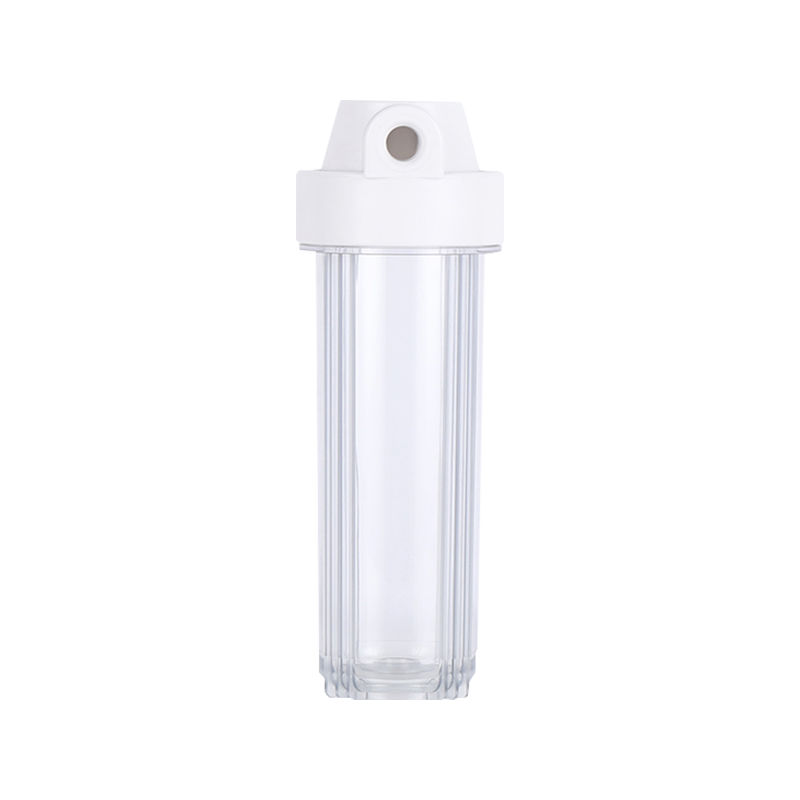
The element determines rejection rate and permeate flow; the housing determines how reliably that element is sealed. A housing with a poor O-ring seat, or a thread that strips under service torque, turns a good membrane into a leaking one. This is one of the components we pay most attention to during assembly, because leaks here are invisible until a TDS meter tells you something is wrong.
Booster pump
Where inlet pressure sits below roughly 40 psi, a pump restores the driving force the process needs. Without it, output drops and the concentrate ratio drifts.
Flow restrictor
A small calibrated device on the drain line sets the concentrate ratio. Change it and you change recovery, membrane loading and the service life of everything downstream.
Check valve
Prevents permeate from flowing backward into the membrane when the unit shuts off, which protects against the pressure spikes that quietly shorten membrane life.
Storage tank and faucet
The tank buffers the difference between slow membrane output and fast draw-off at the tap. Its pre-charge pressure is a common cause of "the system got slow" complaints.
TDS meter and fittings
Inline meters give the simplest health check available to a user. Quick-connect fittings, meanwhile, are where most field leaks begin.
Pressure, Temperature and TDS: What Changes the Process
The reverse osmosis process is sensitive to operating conditions in ways that are easy to overlook until performance drifts.
Q: Does inlet pressure really matter that much?
It does. Permeate flow rises roughly in proportion to net driving pressure, which is applied pressure minus osmotic pressure. If feed pressure falls, output falls and the membrane works harder for the same volume of permeate.
Q: Why does output drop in winter?
Cold water is more viscous, and membranes are rated at 25 degrees Celsius. Output can fall noticeably at 10 degrees, and boost pumps sometimes need to be resized for cold-climate installations.
Q: Does high TDS shorten membrane life?
High TDS raises osmotic pressure, so it reduces permeate flow and increases concentrate loading. Fouling and scaling risk rises with it, which is why pre-treatment matters more on hard or brackish feed water.
Q: Should I expect the same result from every system?
No. Stage count, membrane specification, restrictor sizing and pre-treatment all vary, and the same membrane behaves differently on well water than on municipal supply.
Keeping the Process on Track
Every stage in the chain has a service interval, and the intervals are not interchangeable. Replacing a membrane on the carbon block's schedule is expensive; replacing a carbon block on the membrane's schedule is a false economy.
3 to 6 months
Sediment pre-filter
Replace on pressure drop or visible discolouration, whichever comes first.
6 to 12 months
Carbon block
Chlorine capacity is finite and invisible. Do not wait for a taste change as your only signal.
24 to 36 months
RO membrane
Judge by permeate TDS and flow, not by calendar alone. Good pre-treatment extends this considerably.
12 months
Post-carbon and mineral stages
These affect taste and final water character rather than membrane protection.
 RH-PP 10-Inch PP, CTO and UDF Cartridge SetWholesale 10-inch cartridge set with PP, coal CTO, and UDF stages, suited to trade/OEM buyers coordinating replacement schedules and maintaining water taste.View Product →
For trade and OEM customers, we usually recommend building cartridge sets that match the replacement schedule rather than selling each stage separately, because end users who replace all pre-filters together get far more consistent results than those who replace them one at a time.
Matching the Process to Your Water and Your Capacity
Once the sequence makes sense, the remaining decisions are about capacity, footprint and where the unit will live. A 75 GPD system with a storage tank suits a household that draws water a few times a day, while a 600 or 800 GPD countertop machine is built for continuous draw and no tank at all.
Low daily demand, standard pressure
A tank-based configuration with a modest membrane is quieter, cheaper to run and easier to service.
High daily demand or multiple taps
Higher-flow membranes with a booster pump keep recovery stable when several outlets pull at once.
Difficult feed water
Extra pre-treatment, softening or a larger sediment stage is the difference between a membrane that lasts two years and one that lasts six months.
 RH-RO3 Six-Stage 75G Reverse Osmosis Water FilterComplete six-stage 75G RO purifier with pressure gauge, stand bracket and auto-flush; a platform option for kitchens, apartments or larger RO setups.View Product →
If you would rather start from a complete platform than from individual parts, you can browse our reverse osmosis systems to see how the stages are packaged in tank-based and tankless formats across different flow ratings.
For OEM Buyers and Distributors
Most of the companies that come to us are not buying one unit. They are building a product line, and they need the process inside the housing to be repeatable from the first sample to the tenth container. That usually means fixed cartridge dimensions, a defined membrane specification, a housing that survives service torque, and a pre-treatment package matched to the markets the product will actually be sold into.
Because the sequence is modular, it can be reconfigured without redesigning the whole machine. Adding a mineral stage, swapping a granular carbon cartridge for a block, or moving from a 75 GPD element to a 400 GPD element are all changes we handle at the assembly level rather than the tooling level. Our water filter solutions for OEM page outlines how those projects are typically scoped.
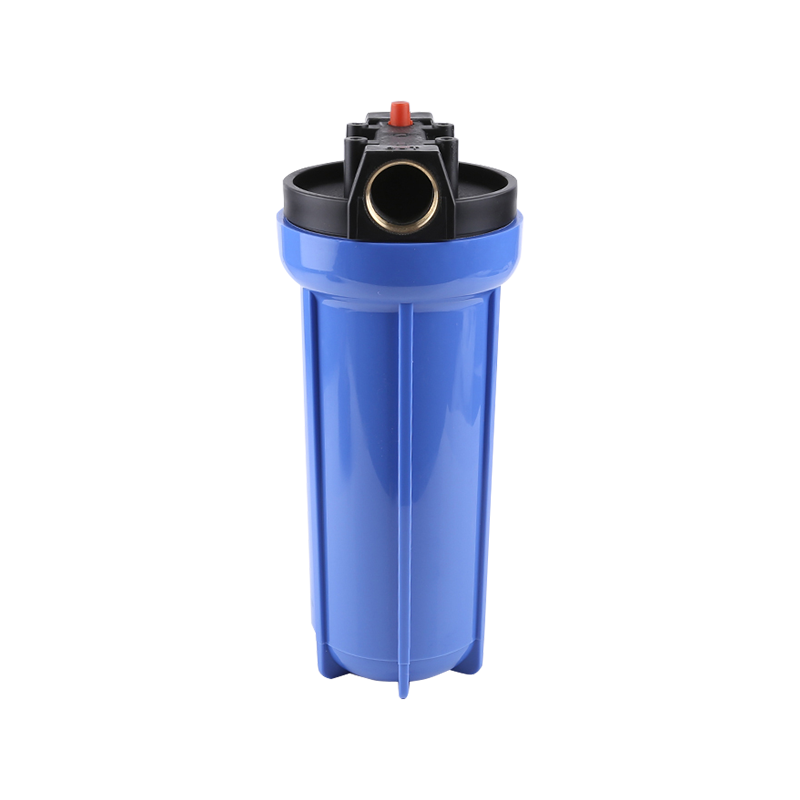
 10-Inch Threaded RO Membrane ShellWholesale 10-inch threaded RO membrane shell in color box packing, suited to modular OEM filtration builds and replacement assembly.View Product →
Frequently Asked Questions
Does reverse osmosis remove everything from water?
No. It rejects the great majority of dissolved salts, metals and micro-organisms, but small neutral molecules such as dissolved carbon dioxide can cross the membrane, and the process does not distinguish between beneficial and undesirable minerals.
How much water does the process send to drain?
Household systems commonly run between 1:1 and 1:3 permeate to concentrate. The exact ratio depends on the flow restrictor, feed pressure, temperature and membrane specification, and it can be improved with a permeate pump or by recycling a portion of the concentrate on larger systems.
Why does my system produce less water than it used to?
The usual causes, in rough order of likelihood, are a clogged sediment or carbon pre-filter, cold feed water, dropped inlet pressure, a depleted storage tank pre-charge, or a membrane that has scaled or fouled. Checking permeate TDS and flow together narrows it down quickly.
Can the process run on well water?
Yes, but well water almost always needs more pre-treatment. Iron, manganese, hardness and sediment load the front stages faster, so sediment filtration, softening or iron removal ahead of the membrane is often essential rather than optional.
Do I need a remineralisation stage?
It is a preference, not a requirement. RO permeate is low in minerals and slightly acidic, and a mineral or pH cartridge simply restores a controlled amount of calcium and magnesium along with a more neutral taste.
Is the membrane the only stage that matters?
The membrane does the finest work, but it only performs as designed when the stages before it are doing theirs. In practice, most premature membrane failures trace back to a pre-filter that was replaced too late.
Seen as a whole, the RO water filter process is less a single technology than a carefully ordered conversation between stages: coarse filtration that protects fine filtration, carbon that protects the membrane from chlorine, a membrane that removes what nothing before it could, and finishing stages that make the result pleasant to drink. Understand the order, and sizing, servicing and troubleshooting all become considerably less mysterious.

 +86-18368206374
 No.99,Yuma Road,Mazhu Town,Yuyao City,Zhejiang Province,China.
 English
 русский
 Español
 عربى
 中文简体

 >
 >
 >
 >
 >
 >
 >
 >